Ingredients
Equipment
Method
- Step by Step Instructions:
Step 1: Prepare the Broth
Roast the Pork Bones
- Heat oil in a large pot.
- Brown the pork bones to add flavor.
Add Aromatics
- Add garlic, ginger, and onion.
- Sauté until fragrant.
Simmer the Broth
- Add water, bring to a boil.
- Lower heat and simmer for 6-8 hours.
Season the Broth
- Add soy sauce and miso paste.
- Simmer for another 30 minutes.
Step 2: Cook the Noodles
Boil the Noodles
- Cook ramen noodles per package instructions.
- Drain and set aside.
Step 3: Prepare the Toppings
Make the Chashu
- Braise pork belly in water, soy sauce, sake, and sugar.
- Cook for 1-2 hours.
- Slice thinly.
Boil the Eggs (Optional)
- Soft-boil eggs for 6-7 minutes.
- Peel and set aside.
Step 4: Assemble the Ramen
Serve the Broth
- Add noodles to a bowl.
- Pour hot tonkotsu broth over the noodles.
Add Toppings
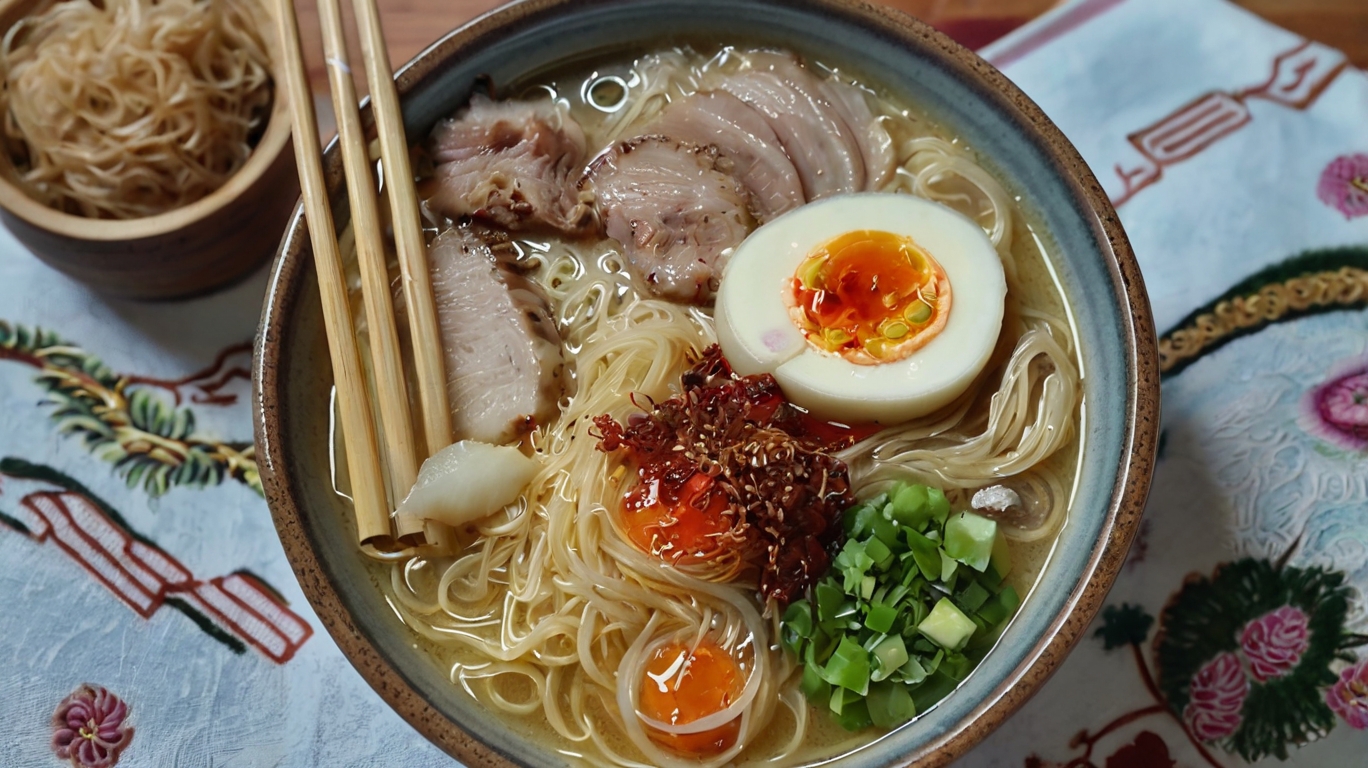
- Place chashu, green onions, soft-boiled egg, and sesame seeds.
Optional
- Add pickled ginger or bamboo shoots.
- Enjoy! Your authentic Hakata Ramen is ready!
Servings and Preparation Times
- Preparation Time: 30 minutes
- Cook Time: 6-8 hours (for the broth)
- Total Time: 7-8 hours
- Servings: Makes 4 servings
Notes
- Slow Cook the Broth: The key to an authentic Hakata ramen broth is slow cooking the pork bones for several hours. This process helps release the collagen and marrow, which gives the broth its creamy texture. Don’t rush this step; let the broth simmer on low heat for at least 6-8 hours to get the best results.
- Use Thin Noodles: Hakata Ramen is known for its thin, straight noodles. They cook quickly and absorb the broth well. Make sure to use the right type of noodles for an authentic taste. You can find ramen noodles at most Asian grocery stores or online.
- Top it Off Right: The classic toppings for Hakata Ramen are braised pork belly (chashu), green onions, sesame seeds, and sometimes pickled ginger. Feel free to get creative with your toppings, but these traditional ones really bring out the authentic flavor.
- Balance the Salt: The broth is already quite rich, so you don’t need to add too much salt to the soup. Taste the broth as it cooks and adjust the seasoning gradually, being mindful not to overdo it.
- Make It Your Own: While the traditional version is delicious, you can always add your own twist. Try adding a boiled egg for extra richness, or use other toppings like corn, bamboo shoots, or seaweed to give your ramen a unique flavor.